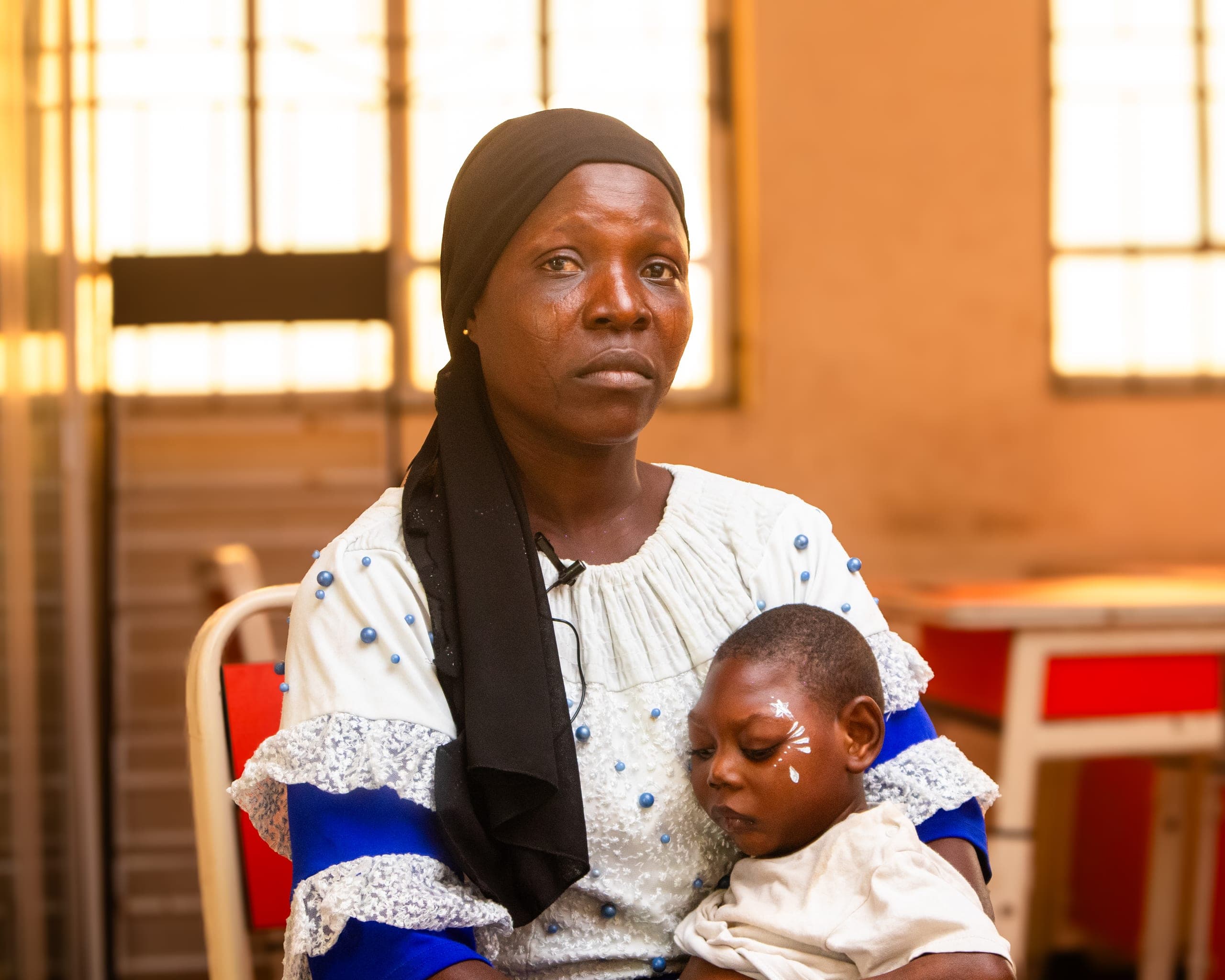
Our conversation with Mrs Tunrayo Oba, a struggling mother of one of the special needs children that Purple Dew is focused on helping, sheds a brighter light on the struggles of raising a child with special needs, her experience, and the areas in which she needs help.
What has been the biggest challenge of raising a child living with disabilities?
From when I gave birth to him, he neither sat nor walked. I have spent money and tried all my best, but for all our effort for him to stand up and walk we have not seen any changes. May God answer our prayers. We still have hope: it was God who gave him to us, and it is still God who knows how He will do His work. That is why we are not relenting.
How do you ensure your child gets access to education, healthcare and social opportunities?
It is what people assist me with and what I am able to get. I had a trade I was doing before, but when I gave birth to him I spent all the money. Sometimes I take him out to beg so I can use the proceeds to take care of him when there is no money with me. That is how we have been managing.
What would you like the government or community leaders to do better for families like yours?
What I want from the government is that caring for him can be a priority, and likewise his siblings, and accommodation. Presently I have no capital to trade with. I cannot pay for my rent; my landlady took me to court and people had to appeal to her on my behalf to give me some time. That is how it is.
What advice will you give to parents caring for children living with disabilities?
Some of these parents do not take care of these children. Do they know what the child can turn out to become in the future? That God created him like that has a reason. Anyone with such a child should care for them, because nobody knows tomorrow. That is my advice: have hope, for as long as you are still alive, there is still room for change.
Mrs Oba's story highlights the difficulties in accessing education, healthcare and social opportunities, as well as the emotional and financial burdens that come with raising a child with disabilities. It is a call to action:
Increased access to inclusive education and healthcare
Financial assistance such as grants, subsidies or microloans
Emotional support and counselling for caregivers
Despite the challenges, her message is one of hope and resilience. Every child, regardless of their abilities, deserves love, care and support.